Filter

Antireflexbeschichtungen

Antireflexbeschichtungen ⇒ höhere Leistungsfähigkeit der Optiken ✓ Funktionsweise erklärt ✓ Spezifikationen von BBAR-Beschichtungen ⇒ mehr erfahren!

Jetzt ansehen

Eine Einführung in optische Beschichtungen

Edmund Optics erklärt optische Beschichtungen ⇒ Beschichtungsverfahren ✓ Veränderung von Transmission, Reflexion + Polarisation ⇒ mehr erfahren!

Jetzt ansehen

Auswirkung der Linsengeometrie auf die Abbildungsleistung

Der Vergleich von Asphären, Achromaten und sphärischen PCX-Linsen in verschiedenen Situationen zeigt die ideale Anwendung für jeden Linsentyp.

Jetzt ansehen

Apochromatisch

Tubuslänge für unendlich korrigierte Systeme

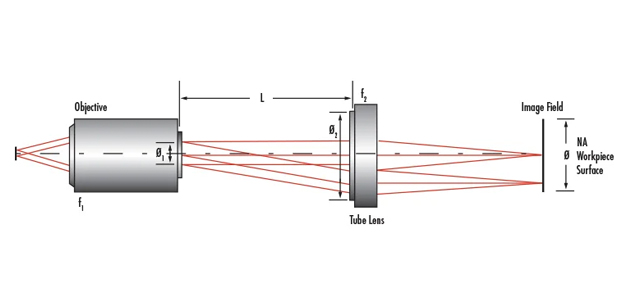
Berechnungstool Tubuslänge ⇒ Unendlich korrigierte Mikroskopsysteme ✓ Vermeidung von Vignettierung bei Einsatz von Tubuslinsen ⇒ Mehr erfahren!

Jetzt ansehen

Achrotech: achromat cost versus performance for conventional, diffractive, and GRIN components

Grundlagen zur Auflösung und Vergrößerung unendlich korrigierter Objektive

Wichtige Fachbegriffe | Geringe Vergrößerung | Hohe Vergrößerung. Mehr erfahren!

Jetzt ansehen

Einsatz von Tubuslinsen mit unendlich korrigierten Objektiven

Ein Bild mit einem unendlich korrigierten Objektiv erzeugen? Dazu brauchen Sie eine Tubuslinse! Edmund Optics erklärt, warum und wie das funktioniert.

Jetzt ansehen

What is an "in-line" microscope?

What is an infinity-corrected objective?

Can I use an infinity-corrected objective in my microscope to get a longer working distance?

What is "DIN" and "JIS"? What is the difference between them?

I’m using the MT-1 Accessory Tube Lens and MT-1/MT-2 C-Mount Adapter. Two thin brass rings came with the adapter. How are they used?

What is the significance of the field number of an objective and what is it dependent on?

Plan Objective

Semi-Plan Objective

Tube Lens

Achromatische Linsen und ihre Eigenschaften

Achromatische Linsen optimal nutzen ⇒ verbesserte Bildgebung ✓ Asphärische Achromate ✓ besserer Energiedurchsatz ✓ Fokusleistung ⇒ mehr erfahren!

Jetzt ansehen

Achromatic Lenses Review

Learn about EO's most popular family of optical lenses and discover if achromatic lenses are ideal for your next application.

Jetzt ansehen

How is the location of the principal plane of a negative achromatic lens calculated?

Abbe-Zahl

Achromatic Lens

Kronglas

Doubler Tube

Doublet Lens

Flint Glass

Refraction

Die Zukunft der Mikroskopobjektive

EO's Trends in der Optik: Fortschritte in der Mikroskopie lösen die Herausforderungen der Zukunft. Erfahren Sie mehr!

Jetzt ansehen

Optical Microscopy Application: Brightfield Illumination

Looking to use a simple technique for optical microscopy? Check out this article on brightfield illumination to find out more at Edmund Optics.

Jetzt ansehen

Optical Microscopy Application: Darkfield Illumination

Darkfield illumination is the opposite of brightfield illumination. Find out how darkfield differs from brightfield in optical microscopy at Edmund Optics.

Jetzt ansehen

Optical Microscopy Application: Phase Contrast

Think you know all the advantages for using phase contrast in optical microscopy? Advantages, image appearance, and technical details can be found at Edmund Optics.

Jetzt ansehen

What is the difference between Achromatic, Semi-Plan and Plan objectives?

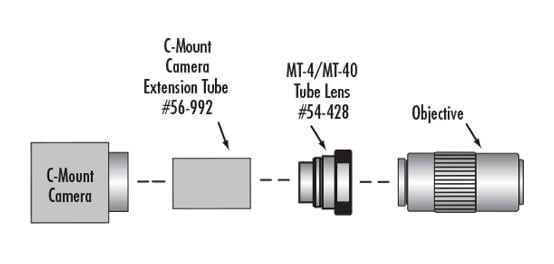
You have a variety of Mitutoyo Tube Lenses (MT-4, MT-1, and MT-2). How can you connect them to a Mitutoyo objective and C-mount camera?

I have an MT-L Accessory Tube Lens but I am unsure about mounting it to my objective and C-Mount camera. Can you explain how it works?

Achromatische Objektive

Konfokalmikroskopie

DIN (Deutsche Industrie Norm)

Periplan Eyepiece

Dispersion

Edmund Optics erklärt verschiedene Dispersionseffekte ⇒ chromatische Dispersion ✓ Modendispersion ✓ Polarisationsmodendispersion ⇒ mehr erfahren!

Jetzt ansehen

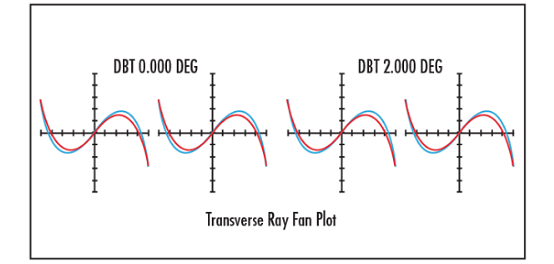
Aspherized Achromatic Lens Review

Aspherized Achromatic Lenses, exclusive to Edmund Optics, are doublet lenses consisting of two cemented optical elements that are matched for their color-correction ability and small RMS spot size.

Jetzt ansehen

What is the difference between the effective focal length and the back focal length?

Hintere Brennweite (BFL)

Dispersion

Hybrid Molding

Sag

Optical Cage System Application: Digital Video Microscope

Are you looking to simplify the assembly of a digital video microscope? Find out how a TECHSPEC Optical Cage System allows for quick build at Edmund Optics.

Jetzt ansehen

Konfokale Mikroskopie

Lernen Sie die Vorteile der Konfokalmikroskopie kennen: ✓ hohe Auflösung ✓ keine Blendeffekte durch räumliche Filterung ✓ Verringerung der Phototoxizität

Jetzt ansehen

Optical Microscopy Application: Differential Interference Contrast

Differential interference contrast (DIC) is one of the polarization techniques that can be used in optical microscopy. Learn about this technique at Edmund Optics.

Jetzt ansehen

Field Number

Asphärische Achromate

Asphärische Achromate ⇒ ausgezeichnete, kostengünstige Linsen ✓ für moderne optische Bildverarbeitungssysteme ✓ wesentliche Vorteile ⇒ mehr erfahren!

Jetzt ansehen

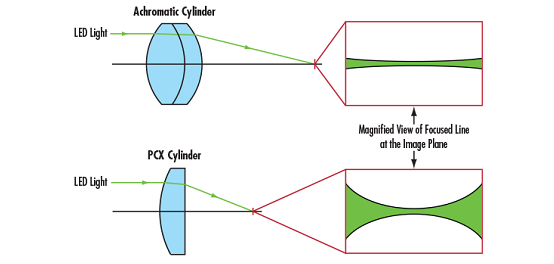
Why Choose an Achromatic Cylinder Lens?

Debating whether or not to use a traditional cylinder lens or an achromatic cylinder lens? Discover the benefits of achromatic cylinder lenses at Edmund Optics.

Jetzt ansehen

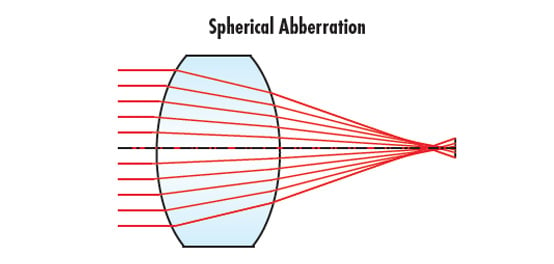
Abberationen

Aberration Optik ⇒ sphärische Aberration ✓ Astigmatismus ✓ Bildfeldkrümmung ✓ chromatische Fokusverschiebung ⇒ mehr erfahren!

Jetzt ansehen

What is the difference between an inked lens and a non-inked one?

If I want to design with your lenses and lens assemblies, how do I get the information that I need?

Now that I have chosen my lens, how do I mount it?

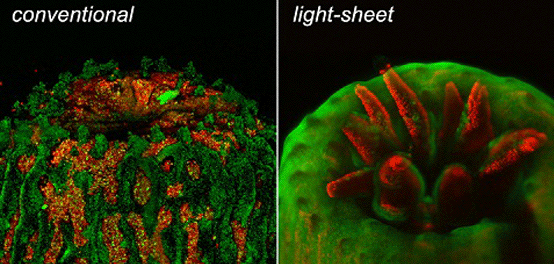
Lichtscheibenmikroskopie

Mit einer 2D-Laserscheibe wird ein dünner Schichtbereich der Probe beleuchtet und die Fluoreszenz angeregt. Phototoxizität und Schädigung werden reduziert.

Jetzt ansehen

Multiphotonenmikroskopie

Multiphoton microscopy is ideal for capturing high-resolution 3D images with reduced photobleaching and phototoxicity compared to confocal microscopy.

Jetzt ansehen

Optical Cage System Application: Differential Interference Contrast (DIC) Digital Microscope

Differential interference microscopy enhances the contrast of object features that are otherwise difficult to observe using brightfield microscopy.

Jetzt ansehen

Mittendicke

Chromatische Fokusverschiebung

Konjugierte Größen

Épaisseur de bord

Distance focale effective (EFL)

Finite/Finite Conjugate

Dunkelfeldbeleuchtung

Diffraction Limit

Parfocality

Modifying Stock Optics Tip #4: Add A Coating To A Stock Lens

Join Andrew Fisher, Manufacturing R&D Engineer at Edmund Optics, as he discusses some tips for modifying stock optical components to fit your application's needs.

Jetzt ansehen

How to Determine Magnification of an Optical Lens Setup

When doing basic imaging, how do you determine the magnification an optical lens will provide?

Jetzt ansehen

Understanding Collimation to Determine Optical Lens Focal Length

Collimated light occurs when light rays travel parallel to each other.

Jetzt ansehen

How to Form an Image with an Optical Lens Setup

Although a common misconception, individual optical lenses do not always form an image when the object plane is placed a focal length away from the lens.

Jetzt ansehen

Irregularity

Radius of Curvature

Aufbau von digitalen Videomikroskopen

Aufbau eines digitalen Mikroskops ⇒ hohe Auflösung & Genauigkeit ✓ einfacher Aufbau aus Komponenten ✓ für Inspektionsaufgaben ⇒ mehr erfahren!

Jetzt ansehen

Anwendung optische Mikroskopie: Fluoreszenz

Wondering how fluorescence microscopy works? Find out about the technique, systems, and more at Edmund Optics.

Jetzt ansehen

Grundlagen zu Mikroskopen und Mikroskopobjektiven

Edmund Optics erklärt: ✓ Komponenten für Mikroskope ✓ grundlegende Konzepte und Spezifikationen - Erfahren Sie mehr!

Jetzt ansehen

Hellfeldbeleuchtung

Field of View (FOV)

Magnification

Numerical Aperture (NA)

BBAR-Beschichtung

Dioptrie

Fluoreszenzmikroskopie: In-Line-Beleuchtung mit Bildverarbeitungsfiltern

Fluoreszenzmikroskopie: Basiskonfiguration | empfohlene Komponenten. Mehr erfahren!

Jetzt ansehen

Antireflexionsbeschichtung

Fase

Seamed Edge

Einführung in die Grundlagen der Strahlenoptik

Ein Verständnis von Brechung und Strahlenoptik ist die Grundlage für das Verständnis von komplizierteren optischen Zusammenhängen & Technologien.

Jetzt ansehen

Transmission

How do I clean my optics?

Globale Fertigungsstätten von EO

Edmund Optics® (EO) fertigt jedes Jahr Millionen von präzisen optischen Komponenten und Baugruppen in den 5 globalen Fertigungsstätten.

Jetzt ansehen

Video: Messtechnik bei Edmund Optics

Messtechnik als Schlüssel für eine erfolgreiche Fertigung: Erfahren Sie mehr über die Messtechnik, die die Qualität der Optiken sicherstellt.

Jetzt ansehen

Freie Apertur

Surface Quality

The Benefits of Color-Corrected Optical Lenses

Color-corrected optical lenses are ideal for many applications because they reduce multiple aberrations. Learn more about the advantages at Edmund Optics.
Jetzt ansehen