




Optische Kohärenztomographie (OCT)
Die optische Kohärenztomographie (OCT) ist ein fortschrittliches bildgebendes Verfahren, das mit Hilfe von Lichtwellen hochauflösende Querschnittsbilder von biologischem Gewebe erstellt. Es spielt eine wichtige Rolle in Bereichen wie Augenheilkunde, Dermatologie und Herz-Kreislauf-Forschung. Edmund Optics unterstützt die Entwicklung von OCT-Systemen mit einer breiten Palette an fortschrittlichen optischen Komponenten. Dazu gehören Polarisationsoptiken für eine genaue Lichtkontrolle, nicht polarisierende Strahlteiler für ein effizientes Interferometer-Design, Laserspiegel für eine präzise Strahllenkung und OCT-Phantome für die Systemkalibrierung. Unsere breitbandigen Lichtquellen sorgen für eine hervorragende Bildauflösung und -tiefe, während motorisierte Verschiebebühnen, aktive optische Komponenten und Galvanometer ein schnelles und genaues Scannen ermöglichen. Gemeinsam sorgen diese Technologien für hervorragende Abbildungsleistungen und beschleunigen die biomedizinische Forschung und Diagnostik.
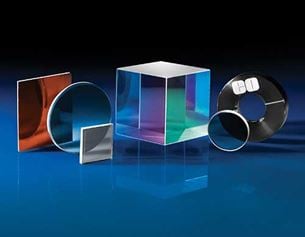
Polarisationsoptiken
Polarisationsoptiken steuern die Ausrichtung des elektrischen Feldes des Lichts und bieten leistungsstarke Möglichkeiten sowohl für das Computational Imaging als auch für astronomische Beobachtungen. Durch den Einsatz von Komponenten wie Polarisatoren und Verzögerungsplatten zur Manipulation und Messung von Polarisationszuständen können diese Systeme den Kontrast verbessern, Blendeffekte reduzieren und Informationen offenbaren, die durch Intensität oder Wellenlänge allein nicht zugänglich sind. In der industriellen Bildverarbeitung ermöglicht dies eine verbesserte Merkmalserkennung und Materialanalyse, während in der Astronomie Wissenschaftler bei der Untersuchung der Interaktionen von Licht mit Staub, Magnetfeldern und Planetenatmosphären unterstützt werden, um die Umgebung der Himmelskörper besser zu verstehen.
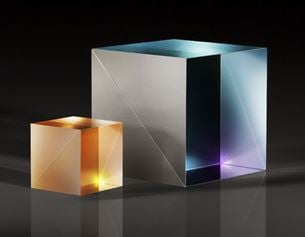
Nicht polarisierende Strahlteiler
Nicht polarisierende Strahlteiler teilen das Licht in optischen Kohärenz-Interferometern in einem definierten Verhältnis (z. B. 50:50) in Referenz- und Probenarm auf, wobei der Polarisationszustand erhalten bleibt. Sie übertragen und reflektieren sowohl s- als auch p-polarisiertes Licht gleichermaßen, wodurch konsistente Interferenzsignale gewährleistet und Polarisationsartefakte minimiert werden. Diese Strahlteiler ermöglichen eine genaue Strahlrekombination und eine stabile Detektion und unterstützen damit präzise tiefenaufgelöste Messungen in der optischen Kohärenztomographie.
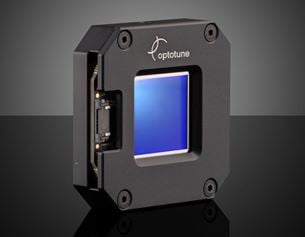
Aktive optische Komponenten
Aktive optische Komponenten nutzen elektrisch betriebene Mechanismen wie einstellbare Fokussierung und adaptive Reflexion zur Steuerung von Beleuchtung und Wellenfrontverhalten und vereinfachen so das Systemdesign. Edmund Optics bietet Flüssiglinsen, variable Diffusoren, Speckle-Abschwächer und adaptive Optiken, die eine schnelle Kontrolle über Fokus und Aberrationskorrektur ermöglichen. Diese Funktionen verbessern das Computational Imaging, indem sie eine umfangreichere Datenerfassung und Wellenfrontformung in Echtzeit für eine nahtlose Integration in die algorithmische Rekonstruktion ermöglichen.
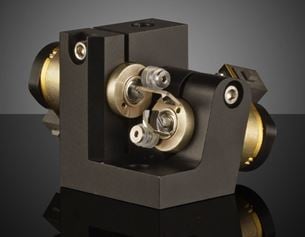
Galvanometer
Mit Umlenkungsspiegeln und optischen Scannern können Sie Ihren Messungen zusätzliche Dimensionen hinzufügen oder Proben effizienter bearbeiten. Die Proben werden oft seitlich oder sogar axial gescannt, so dass Querschnitte entstehen, die, wenn sie übereinandergelegt werden, hochauflösende Details liefern.
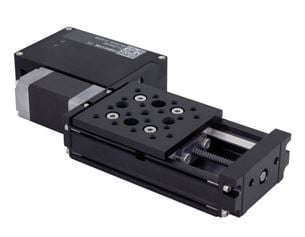
Motorisierte Bühnen
Motorisierte Verschiebebühnen in der optischen Kohärenztomographie (OCT) bieten eine präzise, programmierbare Bewegungskontrolle, die sowohl für das laterale als auch für das axiale Scannen unerlässlich ist und eine hochauflösende Bildgebung, eine automatische Punkt-für-Punkt-Erfassung und eine volumetrische Rekonstruktion ermöglicht. Sie gewährleisten Genauigkeit, Wiederholbarkeit und reibungslose Fokusanpassungen, ermöglichen die Bildgebung über große Bereiche durch Mosaik-Stitching und erleichtern komplexe Scans über gekrümmte oder unregelmäßige Oberflächen, wenn sie in Roboter- und Feedbacksysteme integriert werden. Hochpräzise Tische, z. B. mit Schrittmotor- oder Piezoantrieb, sorgen für eine konsistente Ausrichtung, handhaben die OCT-Instrumente und unterstützen die dynamische Verfolgung, was sie zu einer entscheidenden Komponente für die praktischen und klinischen Möglichkeiten der optischen Kohärenztomographie macht.
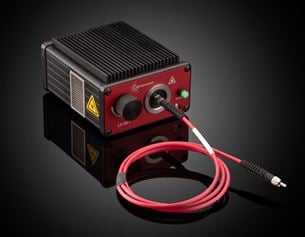
Beleuchtung für Spektroskopie
Die Lichtquellen von Edmund Optics, darunter superlumineszente Dioden (SLEDs), Swept-Source-Laser und Breitbandquellen, sind ideal für die optische Kohärenztomographie (OCT) geeignet, da sie eine große spektrale Bandbreite mit einer kurzen Kohärenzlänge kombinieren und so eine hohe axiale Auflösung und präzise Gewebeabbildung ermöglichen. SLEDs bieten eine stabile, rauscharme Ausgangsleistung für eine Auflösung im Mikrometerbereich, Swept-Laser ermöglichen eine tiefe Gewebedurchdringung und eine schnelle Erfassung für die Bildgebung in Echtzeit, und Breitbandquellen maximieren die Tiefenauflösung und die spektrale Flexibilität. Zusammen verbessern diese Quellen das Signal-Rausch-Verhältnis, unterstützen die nichtinvasive Bildgebung in verschiedenen Gewebetypen und lassen sich nahtlos in OCT-Interferometer integrieren, um detaillierte 2D- und 3D-Bilder zu erzeugen, wodurch sie sich hervorragend für ophthalmologische, kardiovaskuläre und dermatologische Anwendungen eignen.
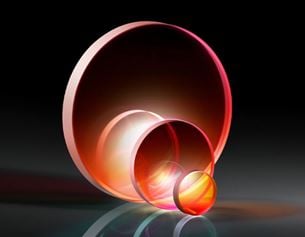
Laserlinienspiegel für 1310 nm
 TECHSPEC® components are designed, specified, or manufactured by Edmund Optics. Learn More
TECHSPEC® 1310nm Laser Line Mirrors are designed with an absolute reflectivity of >99.8% at 1310nm at a 45° angle of incidence. These mirrors are manufactured from high-quality fused silica and are designed for use with high-power laser sources. Available in standard 12.7, 25.4, and 50.8mm sizes, these mirrors can be easily integrated into existing laser systems. Their λ/10 surface flatness and 10-5 surface quality ensure reduced scattering in sensitive laser applications such as optical coherence tomography (OCT).
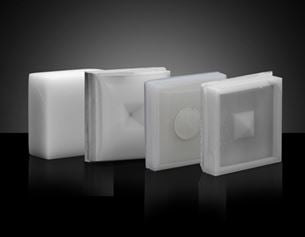
Testphantome für optische Kohärenztomographie (OCT)
Optical Coherence Tomography (OCT) Phantoms provide controlled samples for calibrating OCT systems, ensuring accuracy and reliability. These homogeneous phantoms with well-characterized optical properties are available in Point Spread, Multilayer, Pyramid, and Multipurpose designs, offering diverse calibration options. They also enable validation of image-processing algorithms and support quality-assurance protocols to ensure consistent performance in clinical and research settings. OCT Phantoms are ideal for testing 3D spatial depth resolution and image processing software.
weitere regionale Telefonnummern
ANGEBOTSTOOL
Geben Sie zum Starten die Produktnummer ein.
Copyright 2023 | Edmund Optics, Ltd Unit 1, Opus Avenue, Nether Poppleton, York, YO26 6BL, UK
DATENSCHUTZRICHTLINIE | COOKIE POLICY | AGB | AGB FÜR B2C | IMPRESSUM | BARRIEREFREIHEIT
Die Edmund Optics GmbH Deutschland fungiert als Handelsvermittler für die Edmund Optics BV in den Niederlanden.
Vertragspartner ist Edmund Optics BV in den Niederlanden.
This content may include material that has been generated or modified using artificial intelligence (AI).
The FUTURE Depends On Optics®