




XR|AR|MR
Extended Reality (XR), einschließlich Augmented Reality (AR) und Mixed Reality (MR), stützt sich auf integrierte optische Komponenten, um Licht in kompakten, leistungsstarken Systemen zu erfassen, zu steuern, zu messen und auszustrahlen. Von der Bildgebung und Sensorik bis hin zur Beleuchtung, Validierung und Systemintegration spielt jedes Element eine entscheidende Rolle für die Gesamtleistung des Geräts. Edmund Optics bietet ein umfassendes Portfolio an Lösungen, das Objektive, Filter, Fenster, Lichtformungs- und Polarisationsprodukte, Material für Tests und Assemblierung umfasst. Damit können Ingenieure immersive Technologien der nächsten Generation effizient entwerfen, als Prototypen entwickeln und optimieren.
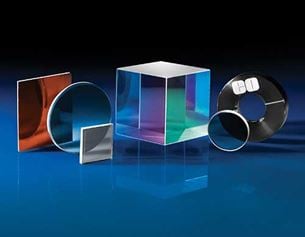
Polarisationsoptiken
Polarisationsoptiken steuern die Ausrichtung des elektrischen Feldes des Lichts und bieten leistungsstarke Möglichkeiten sowohl für das Computational Imaging als auch für astronomische Beobachtungen. Durch den Einsatz von Komponenten wie Polarisatoren und Verzögerungsplatten zur Manipulation und Messung von Polarisationszuständen können diese Systeme den Kontrast verbessern, Blendeffekte reduzieren und Informationen offenbaren, die durch Intensität oder Wellenlänge allein nicht zugänglich sind. In der industriellen Bildverarbeitung ermöglicht dies eine verbesserte Merkmalserkennung und Materialanalyse, während in der Astronomie Wissenschaftler bei der Untersuchung der Interaktionen von Licht mit Staub, Magnetfeldern und Planetenatmosphären unterstützt werden, um die Umgebung der Himmelskörper besser zu verstehen.
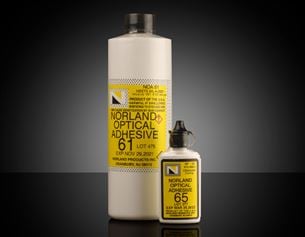
Optikkleber
Optikkleber sind Spezialmaterialien, die zum Verkleben und Einbau optischer Komponenten verwendet werden, wobei eine hohe Lichtdurchlässigkeit und minimale Verzeichnung gewährleistet bleiben. Diese Kleber wurden mit kontrollierten Brechungsindizes entwickelt. Sie reduzieren Reflexionsverluste und verbessern die optische Kopplung zwischen den Elementen. In XR-Systemen spielen optische Klebstoffe eine entscheidende Rolle bei der Assemblierung kompakter, leistungsstarker Geräte, da sie eine stabile Ausrichtung und eine effiziente Lichtübertragung in Anwendungen wie Sensormodulen, Display-Stacks und Wellenleiterintegration ermöglichen.
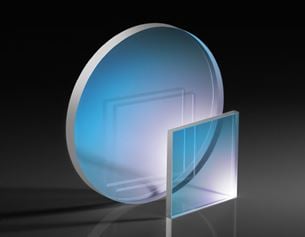
Spezialfenster
Optische Fenster mit flachem Profil sind darauf ausgelegt, Schutz und eine hohe Lichtdurchlässigkeit in Anwendungen zu bieten, in denen Größe, Gewicht und Dicke entscheidende Faktoren sind. Diese dünnen Fenster werden aus widerstandsfähigen Materialien wie chemisch gehärtetem Glas hergestellt und bieten eine hervorragende Leistung bei minimalem Platzbedarf. In XR-Anwendungen werden häufig flache Fenster zum Schutz von Kameras, Sensoren und Displayelementen eingesetzt, wodurch kompakte und leichte Konstruktionen möglich sind, ohne dass die Bildqualität oder die Signalintegrität beeinträchtigt wird.Optische Fenster mit flachem Profil sind darauf ausgelegt, Schutz und eine hohe Lichtdurchlässigkeit in Anwendungen zu bieten, in denen Größe, Gewicht und Dicke entscheidende Faktoren sind. Diese dünnen Fenster werden aus widerstandsfähigen Materialien wie chemisch gehärtetem Glas hergestellt und bieten eine hervorragende Leistung bei minimalem Platzbedarf. In XR-Anwendungen werden häufig flache Fenster zum Schutz von Kameras, Sensoren und Displayelementen eingesetzt, wodurch kompakte und leichte Konstruktionen möglich sind, ohne dass die Bildqualität oder die Signalintegrität beeinträchtigt wird.
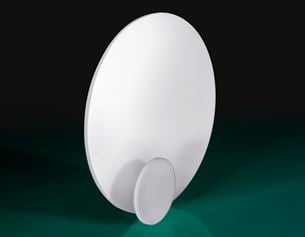
Optische Diffusoren
Les dispositifs de modelage de la lumière et les diffuseurs servent à contrôler et à répartir l'éclairage au sein des systèmes optiques, ce qui permet d'obtenir un éclairage uniforme et de réduire au minimum les variations d'intensité. En diffusant et en homogénéisant la lumière provenant de sources telles que les LED et les lasers, ces composants améliorent les performances du système et la précision des mesures. Dans les applications de réalité étendue (XR), les diffuseurs jouent un rôle essentiel dans le suivi oculaire, la détection de la profondeur et l'éclairage de l'écran, domaines dans lesquels une répartition homogène et contrôlée de la lumière est indispensable.
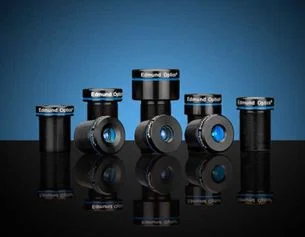
M12-Objektive (S-Mount-Objektive)
Kompakte Objektive bzw. Platinenobjektive sind darauf ausgelegt, bei extrem kleinen Abmessungen eine hohe Abbildungsleistung zu liefern, wodurch sie sich ideal für optische Systeme mit begrenztem Platzangebot eignen. Diese Objektive sind üblicherweise in Formaten wie M12 (S-Mount) erhältlich und unterstützen eine Vielzahl von Sensorgrößen und Auflösungen, wobei sie eine geringe Verzeichnung und eine effiziente Lichtsammlung gewährleisten. Dank ihrer kompakten Bauweise eignen sie sich besonders gut für XR-Anwendungen wie Eye-Tracking, SLAM und Embedded Vision, bei denen Größe, Gewicht und Integrationsflexibilität entscheidend sind.
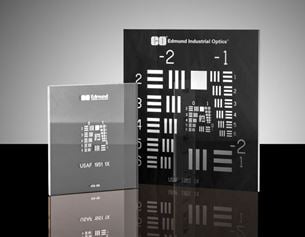
Testcharts
Optische Testbilder und Messbilder sind präzisionsgefertigte Werkzeuge, die zur Bewertung, Kalibrierung und Optimierung der Abbildungsleistung von Bildgebungs- und optischen Systemen eingesetzt werden. Diese Testbilder wurden mit hochpräzisen Mustern und Materialien entwickelt und ermöglichen eine quantitative Analyse von Auflösung, Verzeichnung, Kontrast und Farbgenauigkeit. In XR-Anwendungen spielen sie eine entscheidende Rolle bei der Validierung von Kamerasystemen, der Ausrichtung optischer Komponenten und der Gewährleistung einer einheitlichen Abbildungsleistung über alle Sensor- und Anzeigetechnologien hinweg.
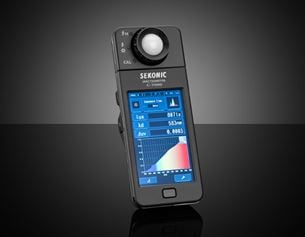
Testen und Messen
Lösungen für Test- und Messtechnik dienen dazu, die Leistung von optischen Systemen und Bildverarbeitungssystemen zu bewerten, zu kalibrieren und zu optimieren. Diese Technologien ermöglichen die präzise Messung von Parametern wie Intensität, spektrale Empfindlichkeit und Bildqualität und unterstützen so eine genaue Systemvalidierung und -integration. In XR-Anwendungen sind Test- und Messwerkzeuge von entscheidender Bedeutung, um die Kameraleistung zu charakterisieren, die Beleuchtung zu optimieren und eine gleichbleibende Bildqualität in modernen Sensor- und Displayarchitekturen zu gewährleisten.
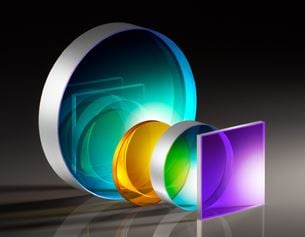
Diffraktive optische Elemente (DOE)
Diffraktive optische Elemente (DOE) haben Muster aus Mikrostrukturen, die die Phase von transmittiertem Laserlicht verändern. Durch Veränderung der Mikrostruktur kann das diffraktive optische Element nahezu jedes Strahlintensitätsprofil und jede Strahlform erzeugen, um die Anforderungen verschiedenster Anwendungen zu erfüllen. Die optischen Elemente sind aus verschiedenen Substraten wie z.B. Kunststoff, Quarzglas, Germanium, Saphir und Zinkselenid (ZnSe) hergestellt und können so für UV-Laser, sichtbare und infrarote Laser eingesetzt werden. Diffraktive optische Elemente sind generell für eine bestimmte Laserwellenlänge entwickelt und ihre Leistung ist wellenlängenabhängig.
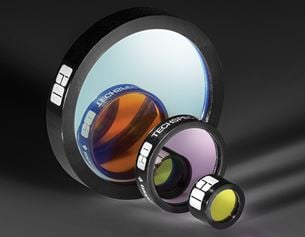
Traditionell beschichtete Bandpassinterferenzfilter (700 - 1650 nm)
Infrared (NIR/SWIR) Filters are designed to selectively transmit or block specific wavelengths in the near-infrared and shortwave infrared spectrum, enabling precise control of light in imaging and sensing systems. By isolating desired spectral bands, these filters improve signal-to-noise ratio, reduce ambient light interference, and enhance detection accuracy. They are widely used in XR applications such as eye tracking, depth sensing, and biometric imaging, where reliable performance under varying lighting conditions is essential.
weitere regionale Telefonnummern
ANGEBOTSTOOL
Geben Sie zum Starten die Produktnummer ein.
Copyright 2023 | Edmund Optics, Ltd Unit 1, Opus Avenue, Nether Poppleton, York, YO26 6BL, UK
DATENSCHUTZRICHTLINIE | COOKIE POLICY | AGB | AGB FÜR B2C | IMPRESSUM | BARRIEREFREIHEIT
Die Edmund Optics GmbH Deutschland fungiert als Handelsvermittler für die Edmund Optics BV in den Niederlanden.
Vertragspartner ist Edmund Optics BV in den Niederlanden.
This content may include material that has been generated or modified using artificial intelligence (AI).
The FUTURE Depends On Optics®