

Produkt in den Warenkorb gelegt

Case Studies  /  A Student-Led High-Altitude Balloon Mission for Space Situational Awareness

REXUS/BEXUS logo CASE STUDY:

A Student-Led High-Altitude Balloon Mission for Space Situational Awareness

Lovejivan Sidhu | York University | Toronto, Canada

The future depends on seeing space more clearly.

Space activity is increasing rapidly, with more satellites, inactive spacecraft, rocket bodies, and debris in the orbit. These objects are known as Resident Space Objects, or RSOs. As the number of RSOs grows, it becomes more important to track, monitor, and understand them so that space operators can reduce collision risk and support long-term space sustainability. This case study highlights the SOBER mission, the Space Object Brightness Evaluation and Reference mission, whose goals included the detection and measurement of RSO brightness in space. The payload for the mission was developed by students from the University of Waterloo, York University, and international partner institutions.

Detection of RSOs and the Need for
High-Altitude Optical Imaging

To detect RSOs, ground-based optical observations are useful, but they are limited by atmospheric distortion, weather, light pollution, and viewing conditions. Space-based observations can reduce these issues, but they are expensive and difficult to access. The SOBER mission addresses this gap by testing whether a small high-altitude balloon payload can collect useful visible and infrared imaging data from a near-space environment. The SOBER payload flew through the ESA-supported Balloon Experiments for University Students (BEXUS) programme as part of the BEXUS 37 high-altitude balloon campaign and was attached to the BEXUS gondola.

Student-built SOBER payload mounted on the BEXUS 37 gondola during pre-flight integration and system checkout before launch.
Figure 1: SOBER Payload Integrated with BEXUS Gondola During Pre-Flight Checkout

Student-Led SOBER Mission for
Space Situational Awareness Research

The SOBER team designed, built, tested, integrated, and operated a compact multispectral imaging payload for Space Situational Awareness (SSA) research. The primary mission objectives were to detect and measure RSO brightness in visible and infrared bands and to cross-reference the collected data with various ground-based observations. The secondary objectives were to demonstrate high-altitude SSA capabilities and provide technology heritage for future balloon and CubeSat-style missions.

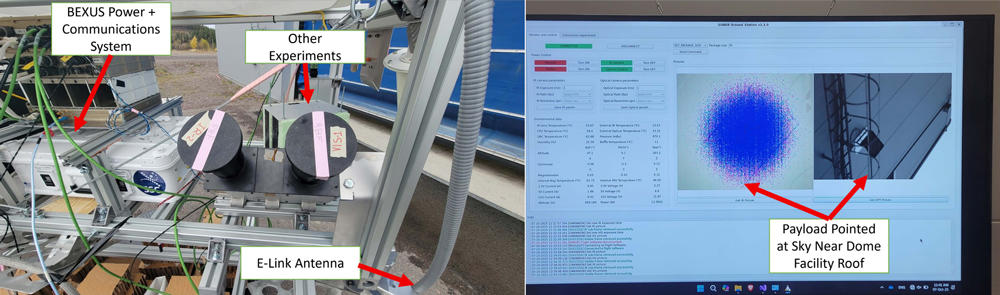
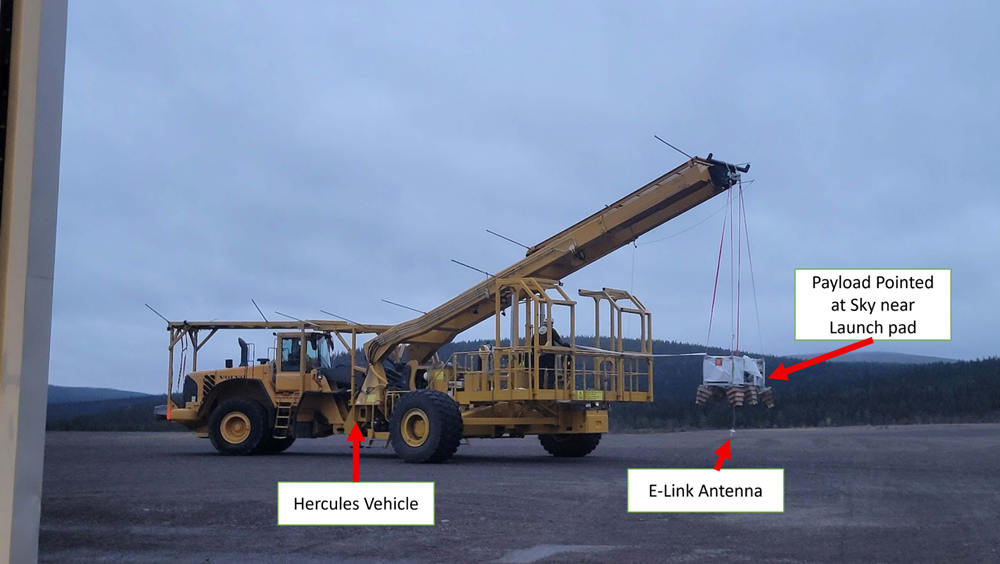
High-altitude balloon payload with the imaging system pointed toward the sky before launch.
Figure 2: SOBER Payload Pointed at the Sky Near the Launch Pad

Engineering a High-Altitude Balloon Payload for Space Observation

The primary technical challenge was integrating optical imaging for visible and infrared, onboard computing, power regulation, telemetry, thermal protection, and data storage into a compact payload suitable for balloon flight. The payload had to operate in a challenging near-space environment with low pressure, cold temperatures, changing lighting conditions, vibration, launch-site handling, and recovery loads. It also had to interface with the BEXUS gondola for power and communications.

Key engineering constraints included:

  • Maintaining camera and electronics performance during ascent, float, descent, and recovery
  • Managing thermal conditions for visible and infrared imaging hardware
  • Mounting the payload to the gondola and keeping the cameras pointed toward the sky
  • Collecting large amounts of image data while maintaining synchronized frames and telemetry
  • Ensuring semi-autonomous payload operations during communication blackouts in flight
  • Protecting data storage so that imagery and telemetry could be recovered after landing
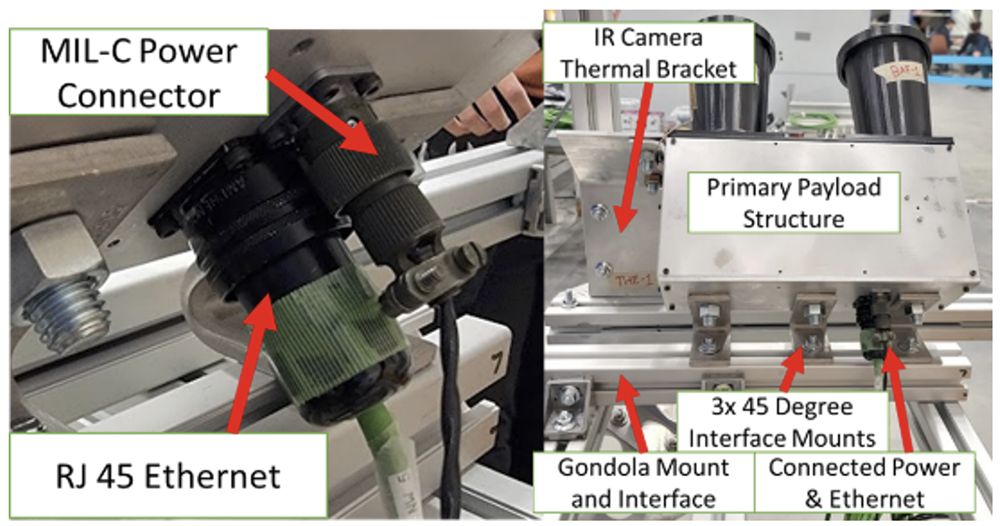
View of the SOBER payload showing the mechanical mounting, power connections, and interfaces used to integrate with the BEXUS gondola.
Figure 3: Gondola Mounting, Power, and Ethernet Interfaces

Multispectral Design and System Architecture

The student team selected a modified 3U CubeSat-style structure for the payload and mounted it at an angle on the outer edge of the gondola to improve sky visibility.

The system included:

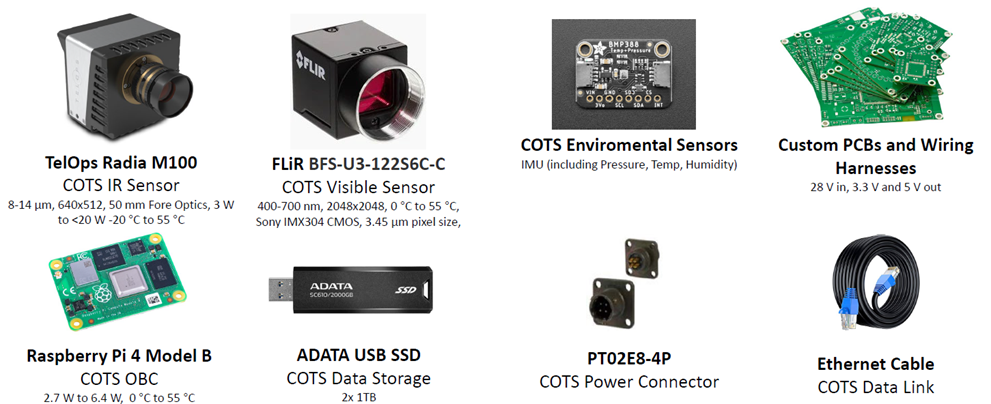
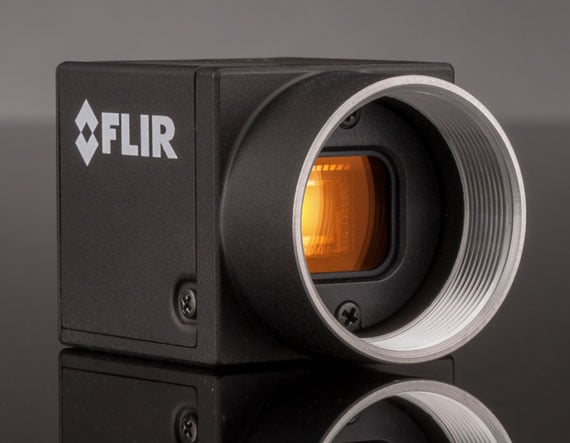
  • A Teledyne FLIR Blackfly S visible camera for star-field and optical image collection
  • A Telops Radia M100 infrared camera for thermal imaging
  • A Raspberry Pi Compute Module 4 as an onboard computer
  • Custom power distribution board connected to the gondola’s 28 V DC power system
  • Regulated 5 V and 3.3 V outputs for payload electronics
  • Environmental sensors for temperature, pressure, humidity, and system monitoring
  • Ethernet connection through the gondola communication system
  • Thermal hardware, heaters, insulation, and interface plates to protect key components
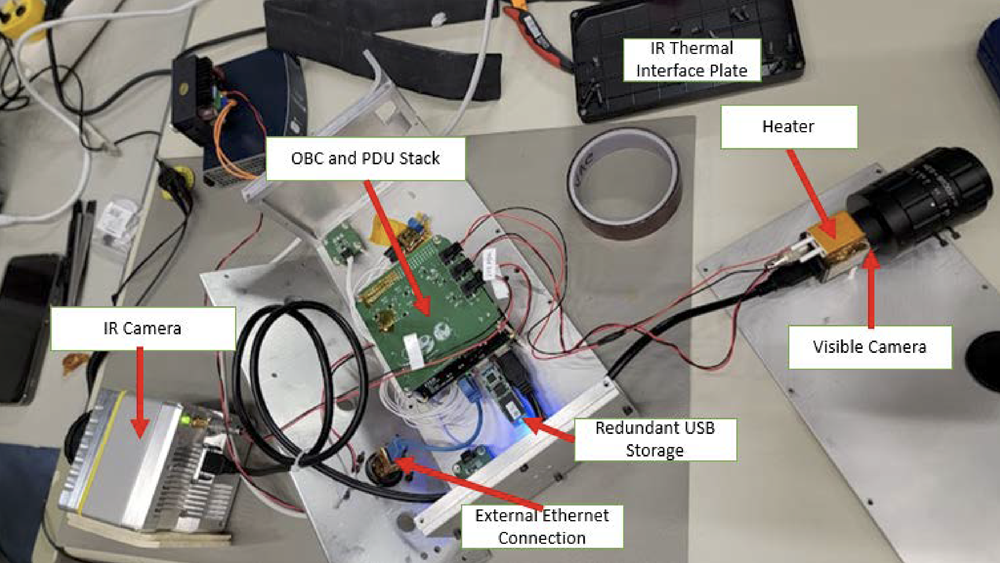
Bench-top view of the assembled components highlighting the visible camera, infrared camera, computer, and supporting subsystems.
Figure 4: Bench-Level Payload Breakdown
Image showing an overview of the integrated components.
Figure 5: Payload Hardware and Key Components

The visible camera collected RAW-format star-field images for later analysis, including plate solving and tracking demonstration work. The infrared camera returned usable thermal frames, supporting the mission’s multispectral data collection goal.

Optics for High-Altitude Imaging:
Edmund Optics® Fixed Focal Length Lens

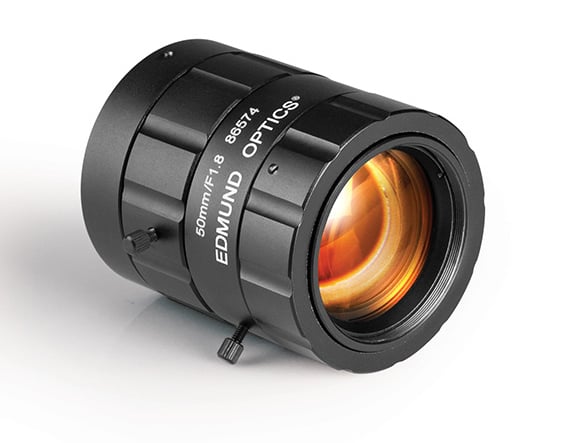
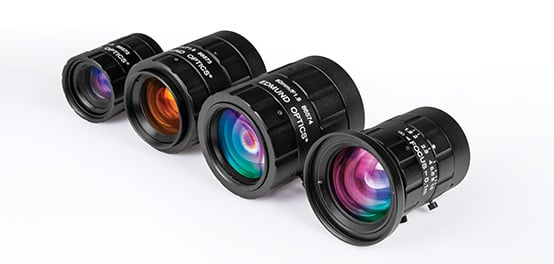
The student team and the SOBER mission were supported by Edmund Optics®. The company provided the imaging lens for the visible imaging system: a 50mm Fixed Focal Length Lens (TECHSPEC® HP Series 50mm #86-574) integrated into the payload and used to capture images during the BEXUS 37 flight. The lens’s compact housing and high optical quality played a critical role by delivering reliable optical performance within the payload's limited space. Using an off-the-shelf Edmund Optics® imaging lens reduced development risk, allowing the student team to focus on payload integration, testing, mission operations, and post-flight data analysis instead of custom optics development.

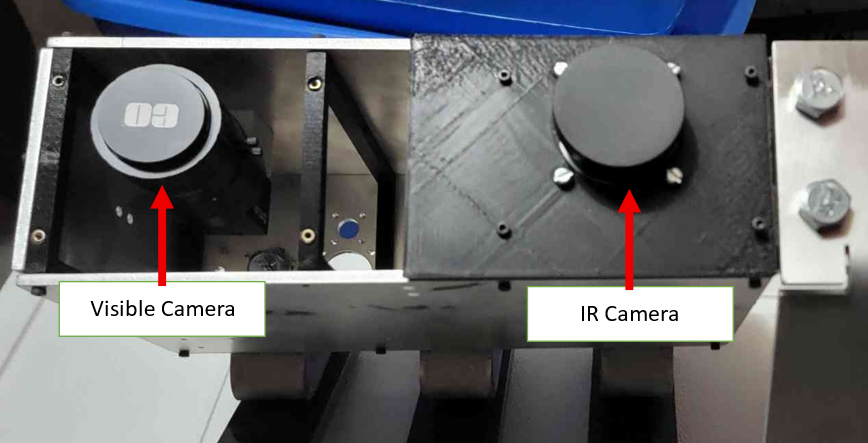
Visible and infrared imaging hardware used in the SOBER payload, including the Edmund Optics<sup>®</sup> imaging lens.
Figure 6: Visible and Infrared Imaging Hardware

Payload Development, Environmental Testing,
and Flight Qualification

The SOBER payload went through a full development and validation process before flight. The team completed manufacturing, procurement, component-level testing, subsystem assembly, payload integration, functional testing, end-to-end verification, environmental testing, final acceptance activities, and shipment to the launch site.

Testing included:

  • Mechanical testing to verify structural survivability during transport and flight handling
  • Ground validation to confirm payload readiness for mission operation and data capture
  • Thermal testing to verify payload operation in hot and cold conditions
  • Low-pressure flight-like testing to confirm operation in a near-space environment
  • Infrared calibration to check camera response
  • Pre-launch testing after arrival in Sweden
  • Individual Experiment, Hardware Interference, and Flight Compatibility testing
  • Late-access and remove-before-flight (RBF) checks before launch

During flight, the mission followed a clear operations sequence:

  1. Ground RBF &
    Ops Start

  2. Launch &
    Ascent

  3. Data Collection
    Start

  4. Float &
    Downlink

  5. Data Collection
    End

  6. Descent

  7. Recovery &
    Inspection

  8. Data
    Processing

The payload launched successfully with the gondola and flight systems fully integrated. During ascent, the system powered on, established communication, and confirmed imaging and heater readiness. During float, the payload captured visible and infrared images while collecting mission data at altitude. During descent, communications became more limited, but the payload remained operational and intact for recovery.

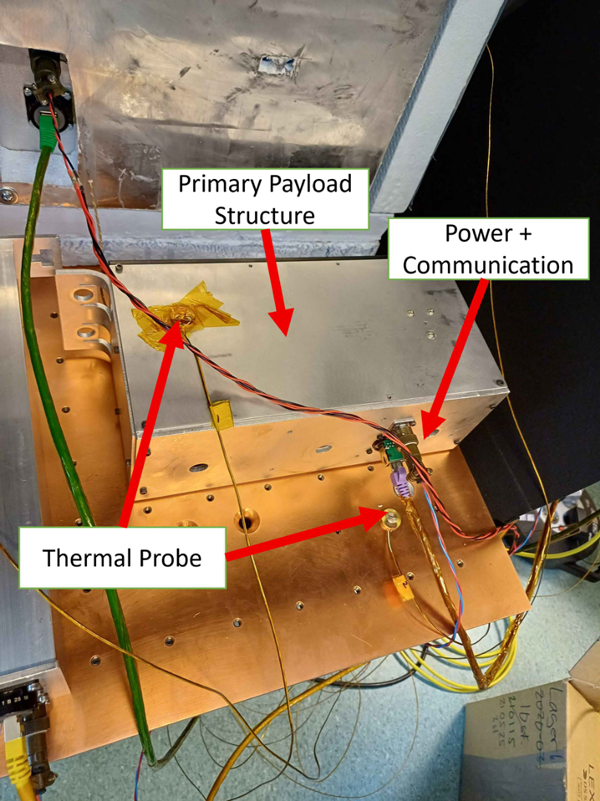
Thermal testing setup with instrumentation used to validate the SOBER payload under expected flight temperature conditions.
Figure 7: Thermal Testing and Payload Instrumentation
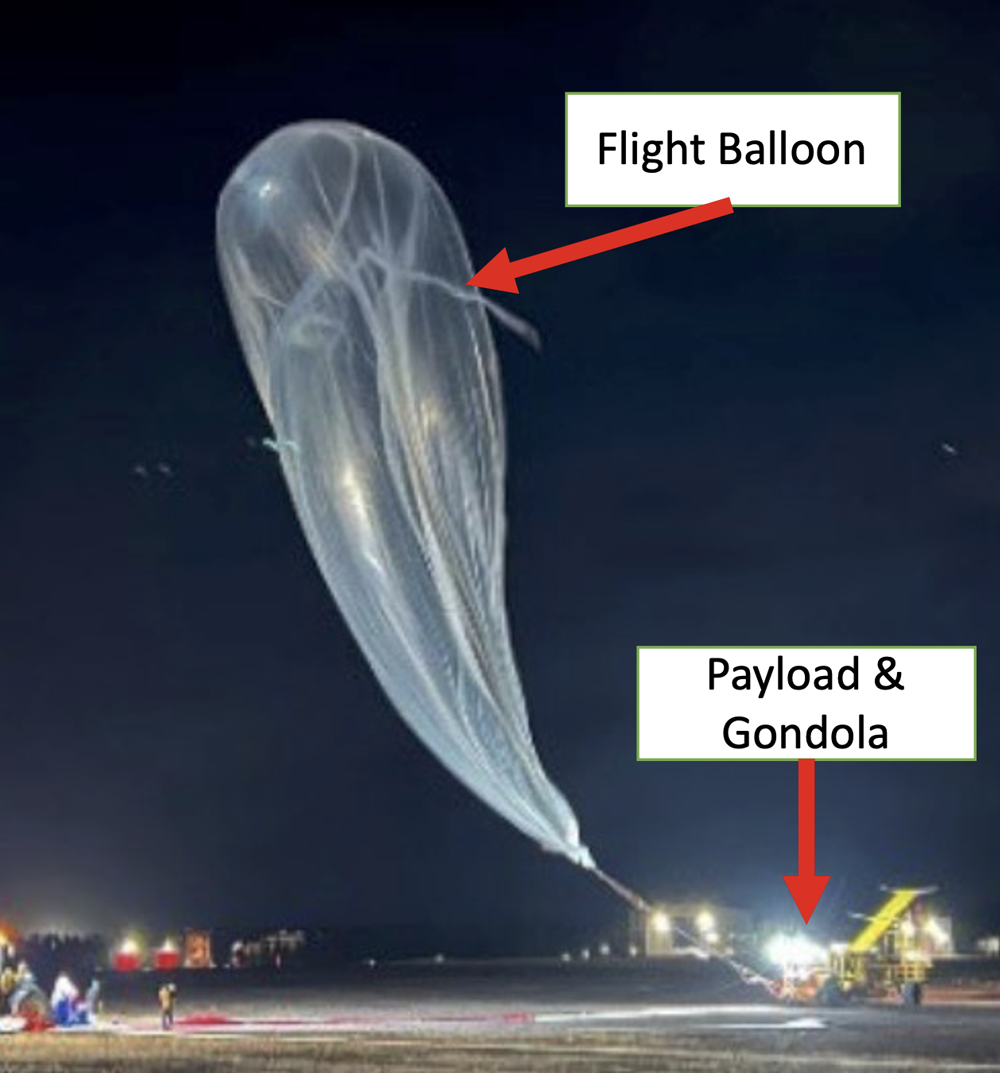
High-altitude balloon launch and flight preparations for the BEXUS 37 mission carrying the SOBER Space Situational Awareness payload.
Figure 8: High-Altitude Balloon Launch

BEXUS 37 Flight Results and Multispectral Imaging Performance

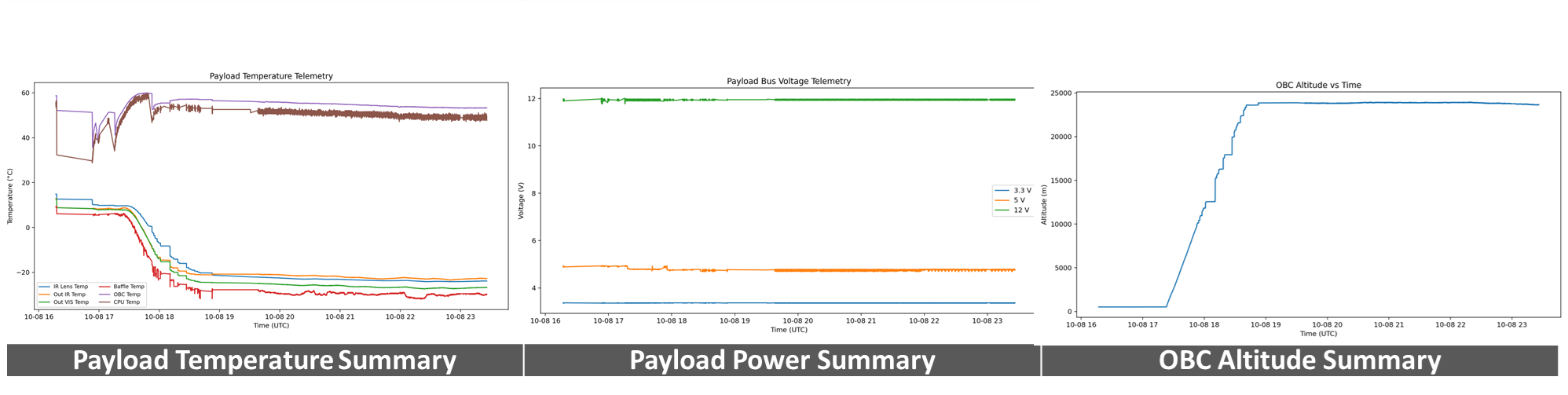
SOBER successfully completed its BEXUS 37 flight and returned valuable mission data. The payload operated through ascent, float, descent, and recovery while maintaining stable thermal and electrical performance. The table below summarizes key results:

Parameter Result
Maximum altitude Approximately 27 km
Float duration Approximately 4.96 hours
Operations mode Semi-autonomous with ground station
Payload thermal range Approximately −25.3°C to 46.1°C
Energy consumption Approximately 110 Wh
Housekeeping completeness Greater than 97%
In-flight data 600 GB of frames and housekeeping
Housekeeping data recorded during the BEXUS 37 flight showing payload temperature, power, and altitude summary.
Figure 9: Flight Housekeeping Data

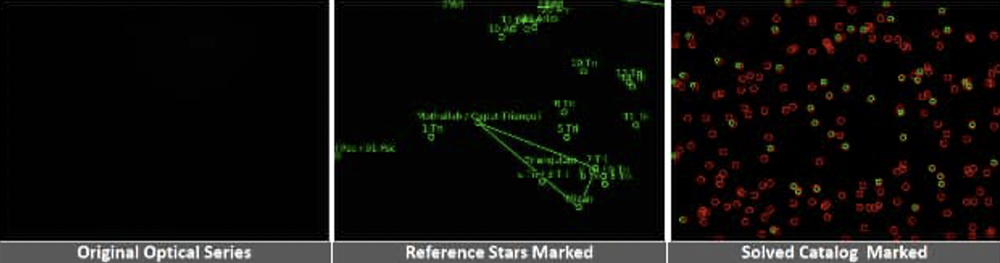
A key achievement was the collection of visible RAW frames with clear star fields. These images were analyzed using tools such as Astrometry.net plate solving and tracking. The payload also returned infrared frames and synchronized telemetry, confirming successful multispectral data collection during flight.

Visible star-field image processed using plate solving to identify stars and determine the camera’s pointing direction.
Figure 10: Visible Star-Field Plate-Solving Results

Future Applications for Balloon-Based and CubeSat SSA Missions

SOBER gave students hands-on experience across the full aerospace mission lifecycle, from systems engineering and payload integration to testing, flight operations, and analysis. It also showed how a compact student-built payload can support future Space Situational Awareness by validating high-altitude visible and infrared methods for RSO tracking and debris monitoring. The TECHSPEC® 50mm Fixed Focal Length Lens (#86-574) provided by Edmund Optics® was integrated into the visible imaging system and successfully enabled the BEXUS 37 flight to return visible frames together with time-synchronized telemetry acquired at approximately 27km altitude, creating a foundation for future balloon-based and CubeSat-style SSA missions. Future work will focus on further analysis of the visible and infrared frames and telemetry collected during flight, including plate solving, RSO candidate detection, brightness refinement, catalogue matching, and visible/infrared data comparison. These results will support improved optical calibration, thermal design, and automated image processing, while showing how student innovation, off-the-shelf optics, and high-altitude balloon testing can move advanced imaging concepts from design to flight validation.

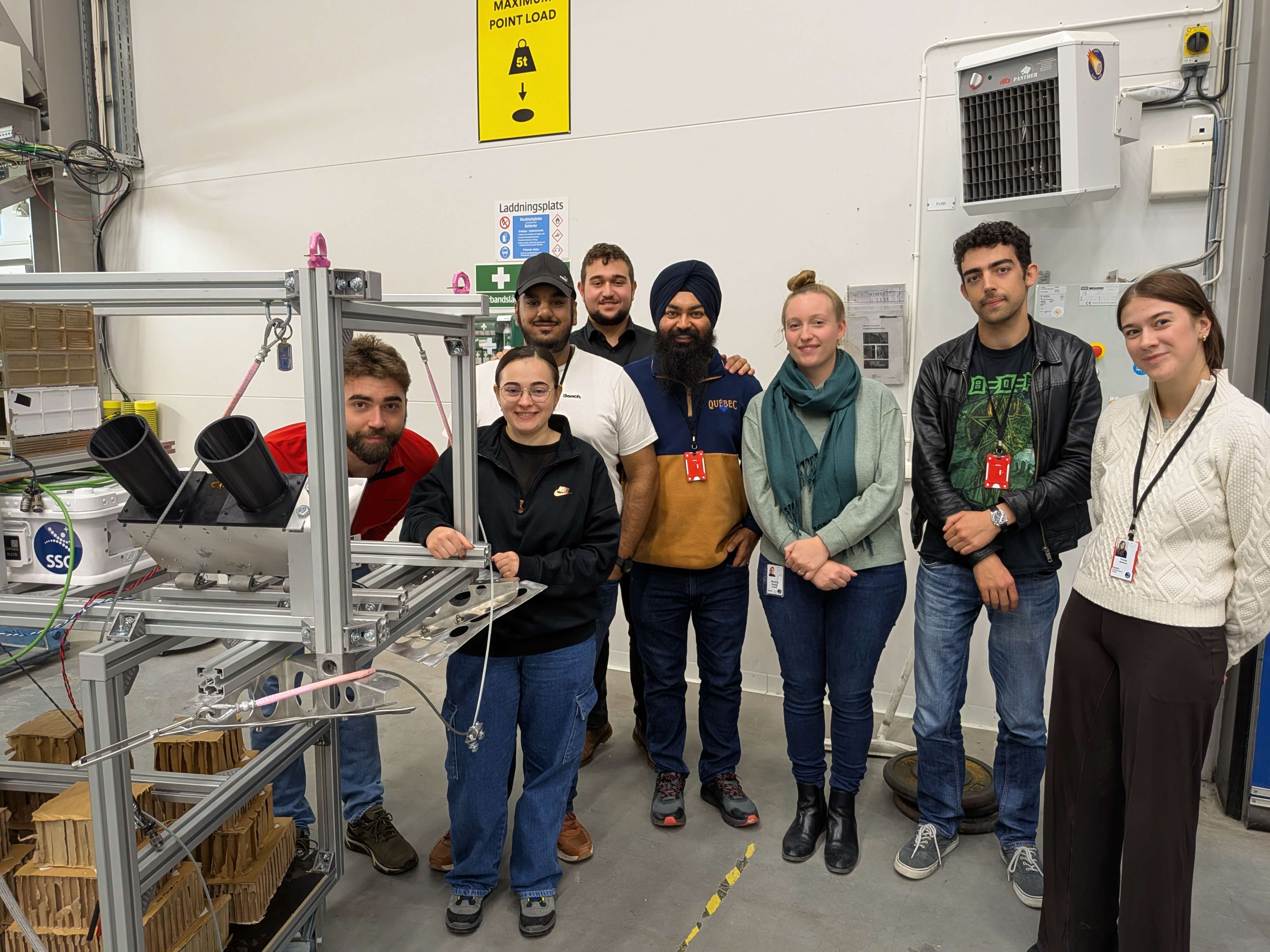
Group photo of the team
Figure 11: The student team behind the SOBER mission, from left to right: Robert Miron, Alice Bucur, Lovejivan Sidhu, Andreas Poimenidis, Gurpreet Singh, Esmée Menting (SSC Staff), Joshua Amar, Madison Prange.
War dieser Inhalt nützlich für Sie?

Edmund Optics supports advanced imaging projects with high-quality, readily available optical components.

For the SOBER mission, a TECHSPEC® HP Series 50mm Fixed Focal Length Lens was integrated into a compact multispectral payload for visible imaging during a high-altitude balloon flight. Its compact housing and reliable optical performance allowed the student team to focus on system integration, testing, and mission operations.

The lens helped enable:

  • Reliable visible imaging in a compact payload
  • Collection of RAW star-field images at approximately 27km altitude
  • Integration with a CubeSat-style multispectral imaging system
 
Vertrieb & Beratung
 
weitere regionale Telefonnummern
Einfaches
ANGEBOTSTOOL
Geben Sie zum Starten die Produktnummer ein.